April 2026 – Private STEM Event
Host Huda Clemens


The WVAC is a friendly, engaging, and informative Astronomy Community in the West Valley. We have an exciting program of activites from September to May. We invite you all to participate in our activities. We think joining us will enhance your interest in astronomy and astroimaging while having fun at the same time. Consider becoming a member. Our active members use a variety of telescopes, mounts, cameras and electronics, do visual astronomy or electronically assisted astronomy with cameras, or astrophotography by processing many hours of data captured by electronic cameras. We actively share our knowledge and experience with young and old, novices or experts. Please visit our website WWW.WVAC.NET
April 2026 – Private STEM Event
Host Huda Clemens
April 7th 2026 General Meeting
Speaker: Vannessa Gressieux
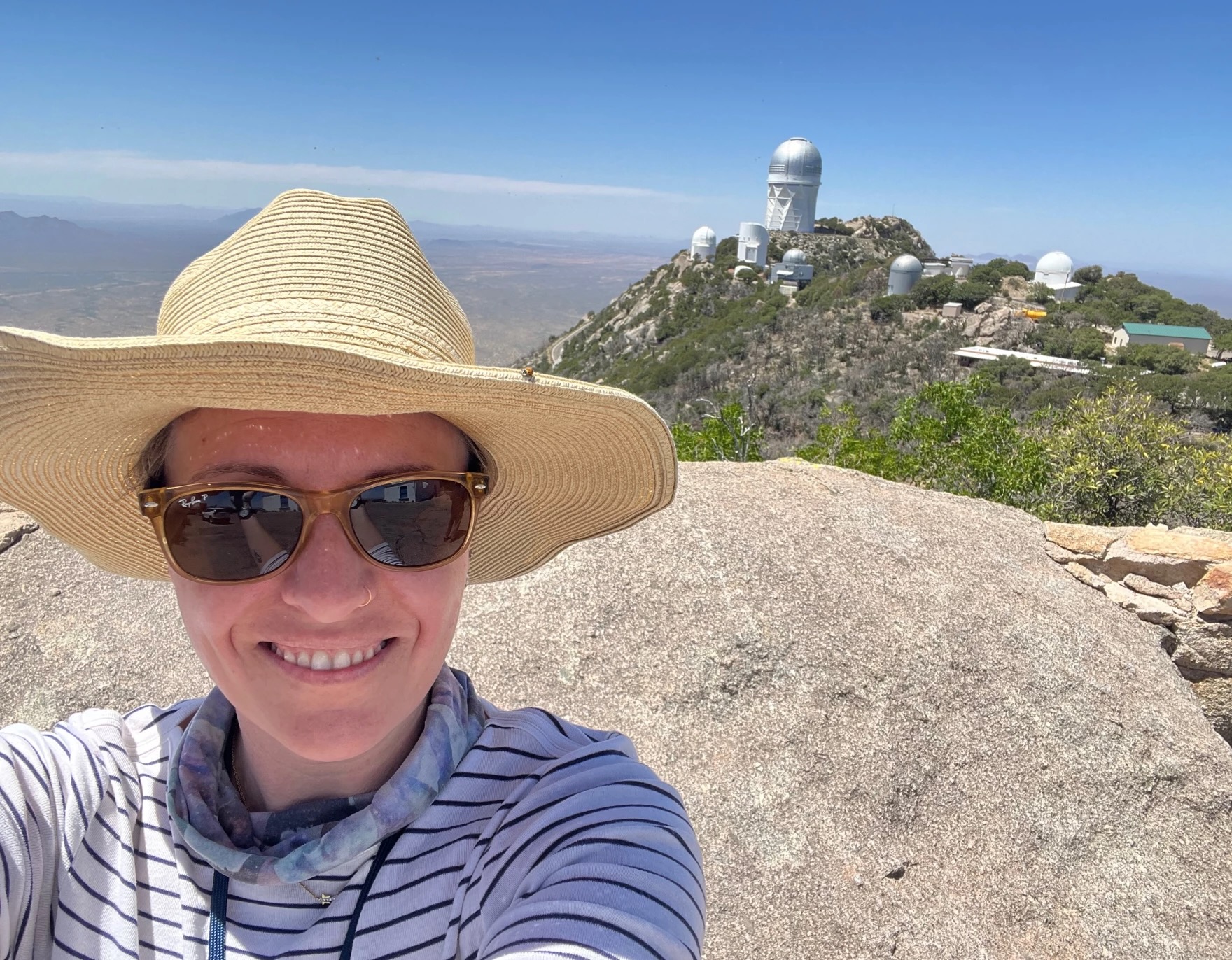
Topic: “We Choose to Go to the Moon” – Vannessa explores and reflects on a moment when ambition, curiosity, and conviction aligned in a way that reshaped what we believed was possible. Using President Kennedy’s historic challenge as a starting point, it explores why we pursue difficult things, not because they are easy, but because they ask more of us. It connects the spirit of the early space program to the work we do today, where exploration is not just about distance, but about perspective. At its core, this is a story about choosing to move forward with intention, even when the outcome is uncertain, and about what becomes possible when people commit to something larger than themselves.
Bio: Vannessa Gressieux is a leader in public engagement and science communication, focused on creating meaningful connections between people and place. Her work has been shaped by roles at the Richard F. Caris Mirror Lab, UA SkyCenter, and UA Sky School, as well as her continued work at NSF’s NOIRLab Kitt Peak National Observatory, where she supports audiences from the region and beyond. Now in her seventh year as a NASA Solar System Ambassadors participant, she is deeply engaged in translating complex ideas into experiences that are accessible, thoughtful, and grounded in curiosity.
With a background spanning education, operations, and program development, Vannessa has led initiatives that bring public audiences into closer relationships with science and discovery. She is especially interested in how shared experiences can inspire learning, stewardship, and a deeper sense of belonging.
5:30 Astro Imaging Meeting
7:00 General Meeting
Speaker: Dr. Rogier Windhorst
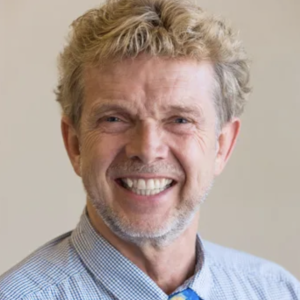
Topic: Astrophysicist Rogier Windhorst takes us on a journey through the cosmos using the groundbreaking discoveries of the James Webb Space Telescope (JWST). Learn how JWST’s infrared technology reveals hidden galaxies, stellar nurseries, and distant black holes, shedding light on questions like: How are stars and planets formed? and What role does cosmic dust play in the universe? Drawing from Einstein’s theories, Windhorst explores the power of gravitational lensing and our deep connection to the universe, reminding us that we are truly “made of stardust.” This engaging talk offers a glimpse into the cosmic circle of life and our place in it. (Source: YouTube)
Bio: Dr. Rogier Arnold Windhorst is an astronomer and a professor of physics and astronomy at Arizona State University. He received his Ph.D. in astronomy in 1984 from the University of Leiden and did post doctorate work at Mt.Wilson and Las Campanas Observatories. He currently serves as associate chair at Arizona State and is among six Arizona state faculty who were awarded Regents Professor appointments in 2006; he presides over the School of Earth and Space Exploration at the university.[1] In 2008, he became Foundation Professor of Astrophysics at Arizona State University and co-director of the ASU Cosmology Initiative.
Windhorst has authored over 100 published scientific papers and has given over 125 lectures at seminars. His research has led to new understandings of how the universe first began. He also studies black holes. His research focuses on Astrophysics and Space Science, and he is the principal investigator of the Hubble Space Telescope mid-UV bright galaxy survey. He is one of the six Interdisciplinary Scientists worldwide for the James Webb Space Telescope, and member of the JWST Flight Science Working Group. Windhorst is involved in planning the JWST science performance, and in critical oversights of its entire design and construction phase. (Source: Wikipedia)
5:30 Astro Imaging Meeting
Speaker: Bernard Miller
Bio: An astrophotographer based in Phoenix, Arizona, he got started after helping my son with his junior high astronomy project. He quickly progressed from visual observing to photography and started doing remote astrophotography in 2010 when he opened the AZSTARMAN observatory in New Mexico, where he as been ever since. He has been a member of the East Valley Astronomy Club in Gilbert, AZ, for over ten years, having lectured at various astronomy clubs in the Phoenix area on remote imaging and image processing. He is also a member of the Astronomical League and recipient of 9 APOD awards and have had dozens of images published in Astronomy Magazine and Sky and Telescope. Visit Telescope Live for more information.
7:00 – 8:00 General Meeting
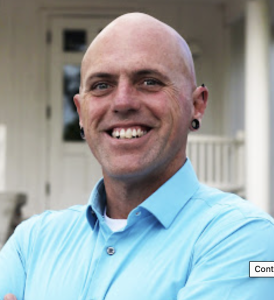
Speaker: Todd Gonzales, Director of Public Programs at Lowell Observatory
Topic: With Todd’s help we will virtually tour some of the aspects of the new Visitor Center at the Lowell Observatory in Flagstaff, AZ.
Bio: Flagstaff, AZ — Lowell Observatory has appointed Todd Gonzales as its new Director of Public Programs, an executive role formerly titled Director of Education. In this position, Gonzales will oversee the observatory’s extensive on-site and off-site public programming, including telescope viewing, presentations, and tours, as well as exhibits and other educational activities at the Marley Foundation Astronomy Discovery Center (ADC). He will also continue to oversee k-12 field trips to the observatory and the Native American Astronomy Outreach Program (NAAOP).
“Todd has been a driving force in Lowell’s education and outreach programs for years, and his appointment is a wonderful opportunity for the observatory,” says Dr. Amanda Bosh, Executive Director of Lowell Observatory. “His passion for connecting people with the wonder of the universe, combined with his ability to build meaningful partnerships, will shape the next era of public programming at Lowell. With the new Astronomy Discovery Center opening its doors late last year, this is an exciting moment to welcome his leadership.”
A seasoned educator and outreach leader with more than two decades of experience, Gonzales has been part of Lowell Observatory’s education team since 2010, most recently serving as Education Manager. In this capacity, he designed and implemented astronomy curricula for school groups, summer camps, and public audiences, while leading major initiatives such as the Lowell Observatory Camps for Kids (LOCKs, now called the Orbits Curiosity Camps) and the development of the Orbits Curiosity Zone. He also co-authored culturally responsive curricula for the Native American Astronomy Outreach Program, broadening the observatory’s impact across Indigenous communities.
“For me, astronomy has always been about finding a connection to the universe around us, and seeing that connection happen with visitors,” says Gonzales. “I’m honored to step into this role at such an exciting moment for Lowell. The ADC, our public telescopes, and our outreach programs create opportunities for every visitor, from school kids to lifelong learners, to see themselves as part of the cosmos. I look forward to building on that work with our incredible team.”
Gonzales’ appointment comes at a pivotal time for the Observatory, with the recent opening of the Marley Foundation Astronomy Discovery Center (ADC). The ADC dramatically expands Lowell’s capacity for science engagement through immersive theater, interactive exhibits, and live programs. As Director of Public Programs, Gonzales will guide the integration of ADC experiences with the observatory’s broader suite of programs, ensuring cohesive and inspiring science education for audiences of all ages.
Gonzales steps into the role following Dr. Stephen Levine, who has served as Director of Education since 2022. Levine will return his full-time focus to his positions as Lowell Discovery Telescope (LDT) Scientist and Astronomer, focusing on partner engagement and advancing research opportunities with the LDT as upgrades and new instruments come online.
“As the Director of Education, it has been a rare privilege to lead the talented Education and Public Programs team over the past two and a half years through the transition into the era of the ADC,” says Levine. “I’m grateful for the chance to support Lowell’s education mission during such an important time, and I am excited to see how Todd and the department expand our reach and impact..”
Gonzales holds a Bachelor of Science in Education with a minor in Biology from Northern Arizona University, graduating magna cum laude and earning recognition as a Robert Noyce Teacher Scholar. Prior to joining Lowell, he taught science in Arizona public schools, founded robotics and coding clubs, and worked extensively in outdoor science education.
5:30 Astro Imaging Meeting
Speaker: Richard Meyers
Abstract: AI-Driven Mastery: Unlocking PixInsight’s Potential for Astrophotography Enthusiasts. It’s not about creating crazy images, but using AI to help with speeding the learning process of Pixinsight.
Bio: Richard Meyers is a beginner astronomy enthusiast and amateur astrophotographer with a growing interest in observational astronomy. He enjoys exploring deep-sky objects and developing practical, beginner-friendly imaging and processing workflows. Richard owns a Celestron C11 and a SeeStar S50 telescope. He helped start the Astronomy Special Interest Group (ASIG) for the Phoenix Astronomical Society (PAS) and currently serves as editor for the PAS newsletter, with the goal of creating a welcoming, hands-on community where newcomers can learn, share experiences, and grow together in the hobby.
7:00 General Meeting
Speaker: Mark Johnston
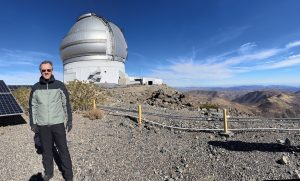
Abstract: My visit to world-class observatories in Chile
I recently had the opportunity to spend 10 days visiting the largest radio and optical observatories in Chile, and get behind-the-scenes access to the telescopes, control rooms, astronomers and more. What’s the difference between Vera Rubin, Gemini South, and ALMA, and why is each important? Join me to learn more about what’s happening in our world class observatories.
Bio: Mark has been fascinated with the night sky since he ‘discovered’ Saturn with his first telescope at age 11. Mark is Vice President of the Phoenix Astronomical Society, a NASA Solar System Ambassador, a NASA Eclipse Ambassador, a member of the Percival Lowell Society and a Telescope.live Tutor and Ambassador. In September 2024, the National Science Foundation appointed him an ACEAP Ambassador to Chile. He has earned a Master of Outreach from the Astronomical League. Based in Scottsdale, Arizona, Mark does over 100 astronomy outreach programs a year at schools, STEM camps, libraries and corporate facilities. He has done astronomy programs for the City of Scottsdale for 20 years, and earned a special Environmental Awareness Award in 2007, Volunteer of the Year in 2008, a 2024 Presidential Special Service award from the White House and a Special Service Award from the City of Scottsdale in 2024 for his volunteer astronomy programs.
Mark is an avid astrophotographer and has imaged from ideal observing locations like the Grand Canyon, Kitt Peak, Haleakala, Chile and Namibia. His work won a NASA APOD and is often published in Sky & Telescope magazine, Astronomy Magazine, BBC’s Sky at Night magazine, and on Space.com. Mark (@azastroguy) is very active on social media, where he posts daily astronomy-related content. Millions of people have seen his entertaining and educational posts on Instagram, TikTok, Facebook, YouTube and Threads